The Guadalajara mint
Guadalajara is the capital of the state of Jalisco and the second largest city in Mexico. The mint was opened under Spanish Colonial rule in 1812. The first Republican coinage was minted in 1825. Cap and Rays 8 Reales were coined during the following periods: 1825-1863, 1867-1870, and 1873-1895. Although the mint was captured briefly in 1860 during the Reform War, coinage of the 8 Reales series continued. Coinage was suspended from 1864 to 1866 during the Maximilian era. The Imperial Forces of Maximilian occupied the Guadalajara mint from 5 January 1864 until 19 December 1866. It is possible ·some coinage took place during this time using Republican dies . This could possibly account for the unusual overdate 1863/4. Minting a "República Mexicana" coin with a date prior to the occupation might have been more acceptable to the Imperialists. Another interruption came in 1870-1873 when the Balance Scale Peso was issued. The Guadalajara mint was closed on 30 June 1895.
Mínt owners or lessees and their tenures
| from | to | |
| 1824 | unknown | Government of the State of Jalisco |
| unknown | 1 July 1857 | Government of the Republic of Mexico |
| 1 July 1857 | 13 August 1868 | Antonio A. Solana, J.S. Laguerene, Gama & Company |
| 13 August 1868 | 1874 | Government of the Republic of Mexico |
| 1874 | 1876 | unknown |
| 1876 | 1879 | Government of the Republic of Mexico |
| l March 1880 | 1 March 1891 | Cia. Limitada Central de Casas de Moneda de México |
| 1 March 1891 | 30 June 1895 | Symon & Camacho |
Assayers and their tenures (as evidence by coinage)
| Initial | Name | Began on | Left office on |
| FS | Francisco Suarez | 1825since 1818 under the Spanish Colonial rule | 1836 |
| LP | unknown | 1830 | 1831 |
| JG |
Juan de Dios Guzman |
1836 | 1839 |
| 1842 | |||
| 1845 | 1868 | ||
| MC | Manuel Cuevas | 1838 | 1841 |
| 1843 | 1845 | ||
| FV | Unknown | 1863 | |
| JM | Jesús P. Manzano | 1867 | 1869 |
| IC | Ignacio Canizo | 1869 | 1870 |
| 1873 | 1878 | ||
| MC | Manuel Contreras | 1874 | 1875 |
| JA | Julio Arancivia | 1877 | 1880 |
| FS |
Fernando Sáyago was born around 1849. On 25 August 1886 Fernando Sáyago entered into a contract with Carlos Pacheco, the Secretario de Fomento,to establish an Oficina Central de Grabado. As well as being an assayer, Sáyago had another interest, as on 5 September 1889 he and Juan C. Padilla were given a monopoly for ten years to make various types of bricksAnuario de legislación y jurisprudencia, Año 1886, núm. 10,561. These were supplied to the Mexico City government in 1890 to pave sidewalks and is September 1892 the town council was considering buying a further 25,000 bricks for their sidewalksEl Correo Español, 4 September 1892 Sáyago was a teniente de ensayador in the Ensaye Mayor in 1890 and in June of that year he was named Ensayador Mayor de la República on the death of Francisco MoralesEl Siglo Diez y Nueve, 18 June 1890. He was on the town council of Mexico City, being elected third regidor for 1893El Siglo Diez y Nueve, 19 December 1892 and first regidor for 1894La Voz de México, 19 December 1893. However, he only held the post of president municipal for a few days as he began feeling unwell on 2 January. A troublesome laryngeal condition quickly turned into a deadly croup, suffocating him in a very short time. He died on 7 January 1894The Two Republics, vol. XXXVIII, no. 7, 9 January 1894: La Patria, Año XVIII, Núm. 5,132, 9 January 1894, He was succeeded as presidente municipal by Sebastián Camacho. |
1880 | 1882 |
| TB | Trinidad Barrera | 1882 | 1884 |
| AH | Antonio Hernandez y Prado | 1884 | 1885 |
| JS |
In January 1884 he was awarded the title of Ingeniero Ensayador y Apartador de metales by unanimous consent La Voz de México, Tomo XV, Núm. 21, 23 January 1884. In 1896 he was Jefe del Ensaye Federal de Guadalajara. Schiaffino was involved in local politics. He served on the Guadalajara city council, being president for the years for the years 1898, 1900, 1901 and 1903 (though he is also recorded as mayor at a banquet on 5 February 1902The Mexican Herald, Vol. XIII, No, 157, 6 February 1902, and elected as an alternate deputy to the state legislature of 1901La Patria de Mexico, Año XXIV, Núm. 7,199, 14 November 1900. He died in Guadalajara on 23 May 1925. |
1885 | 1895 |
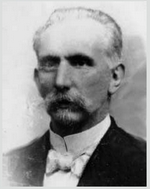 José Salvador Schiaffino Ametller was born in Sayula, Jalisco on 4 January 1848, the son of Mariano Schiaffino y Vallarta and Adela Ametller y Ponce de León.
The assayers on its decimal coinage were:
| Initial | Name | Began on | Left office on |
| C | Ignacio Cañizo y Soto | 1869 | 1877 |
| A | Julio Arancivia | 1877 | 1881 |
| S | 1880 | 1882 | |
| B | Trinidad Barrera | 1883 | 1884 |
| H | Antonio Hernández y Pravo | 1884 | 1885 |
| S | José S. Schiafino | 1885 | 1895 |