Ludwig Christian Lauer’s 2c specimens
Ernst Ludwig Siegmund Lauer founded the medal-making company “Nürnberger Medaillenmünze” in 1790. Ludwig Christoph Lauer took over the business from his father, Johann Jakob Lauer, in 1848 and in 1854 introduced one of Uhlhorn's Coining-presses, thus doing away with handiwork. Four years later he moved into premises at Kleinweidenmühle 12, where water power could be used for the working of the recently acquired presses, balanciers and other machinery. Ludwig renamed the company “Münzprägeanstalt L.Chr.Lauer” in 1860. He died in 1873 and the company continued under the supervision of his wife, Betty, and three sons.
Steam power was added in 1881, and in 1884/85 new buildings with every accommodation were erected to cope with the ever increasing trade. In March 1888, the three brothers Johann, commercial manager, Ludwig, technical manager, and the medallist Wolfgang took the entire direction of affairs, aided by a competent staff of modellers, die-sinkers, silversmiths, and about one hundred workmen, enabling them to undertake every kind of medallic and decorative work in metal.
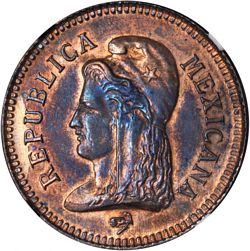
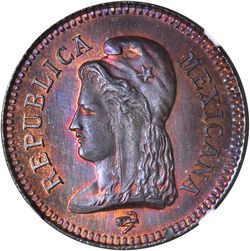
In 1890, the firm issued a series of patterns for Mexico in copper and copper-nickel. Twenty-one designs were struck, all with a common obverse with different reverses for the various states and one commemorating the eightieth anniversary of independence in 1890. There is no indication that the regime of Porfirio Diaz showed any interest in adopting them so these fall into the class of tokens struck as salesmen's samples. However, they are not rare and a complete set was offered in Stack’s-Bowers auction in May 2017, lot 72745 as " Complete 10 piece Set of Pattern 2 Centavos Struck in Bronze, 1890. Bruce-NC12/21. Campeche, Coahuila, Estado de Mexico, Nuevo Leon, Puebla, Quer[e]taro, San Luis Potosí, Tlaxcala, Zacatecas, and Independencia.”
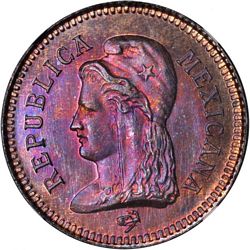
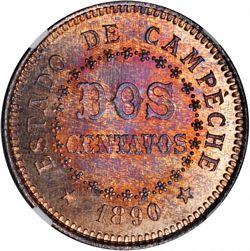
Campeche
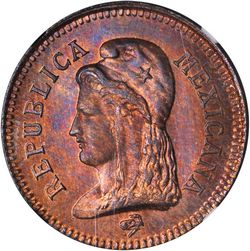
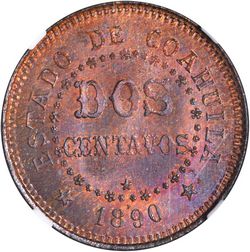
Coahuila
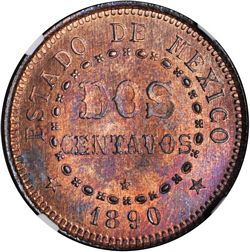
Estado de México
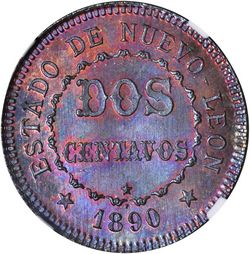
Nuevo León
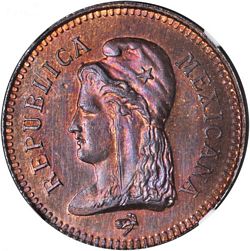
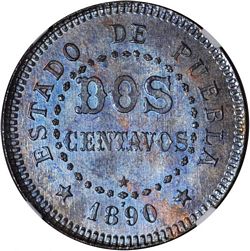
Puebla
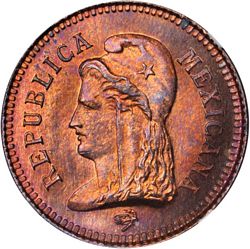
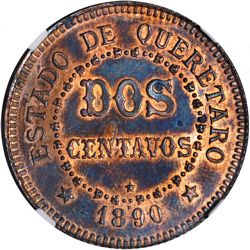
Querétaro
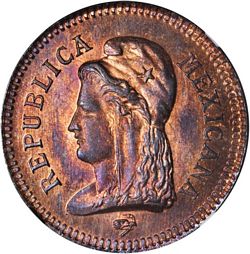
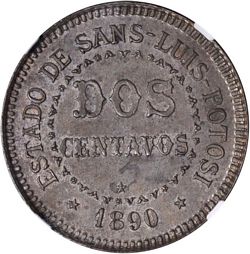
San Luis Potosí
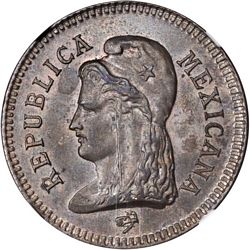
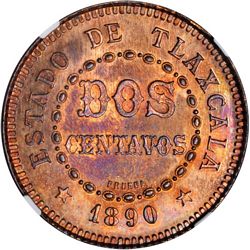
Tlaxcala
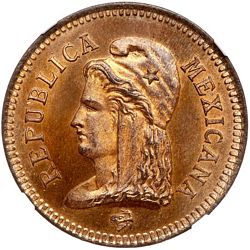
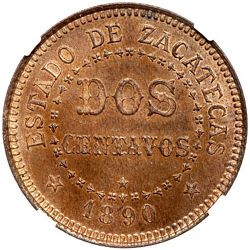
Zacatecas
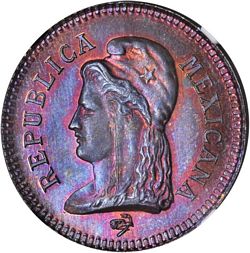
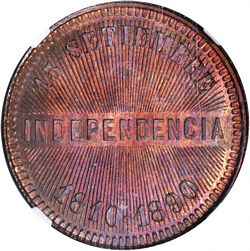
Independencia