The San Luis Potosí mint
by Moisés Gámezbased on Moisés Gámez, “Comerciantes, empresarios mineros, funcionarios públicos y la entelequia por la acuñación. La Casa de Moneda de San Luis Potosí, 1827-1893” in El Sueño de El Dorado: Estudios sobre la plata iberoamericana (siglos XVI-XIX), Universidad de León (España) 2012(/footnote}
According to WardH. Ward, México en 1827, México, Fondo de Cultura Económica, pp. 601-603., before the official establishment of the San Luis Potosí mint, most of the bars were sent to Zacatecas for minting, which is understandable if one considers that the Zacatecan mint was founded in 1824, before the one in San Luis Potosí.
During the first constitutional government in the hands of Ildefonso Díaz de León (25 March 1827-1828), the establishment of the mint formally began. Decree 25 issued in San Luis Potosí on 5 July 1825Archivo Histórico del Estado de San Luis Potosí ("HESLP"), Fondo Secretaría General de Gobierno ("SGG"), Colección de Leyes y Decretos ("CLD"), Decreto 25, 5 July 1825. established the mint to stamp metals in accordance with the law,, empowering it to form contracts for its establishment with companies or with some individual, subject to the approval of CongressM. Muro, Historia de San Luis Potosí, San Luis Potosí, Imprenta, Litografía y Encuadernación de M. Esquivel y Cía, 1910, tomo 1, p. 405..
The State decreed on 20 March 1827[text needed] that the coinage duties would be the income of the government, in such a way that the project began with the supervision and interest of Díaz de León, then considered "capitalist of this city"Periódico Oficial del Estado de San Luis Potosí, 12 November 1887.
According to Gómez del Campo's review, the governor contributed with his own financial resources for such an enterprise, and according to León, he lent the first 100 silver bars to begin the minting; the product remained for years as a reserve fundLeón, op. cit., p. 22; Periódico Oficial del Estado de San Luis Potosí, 12 November 1887. In its original version the Mint is conceptualized such as a coinage workshop, in which Manuel Ramos, who had been in the mint of Zacatecas and collaborated in the formation of the respective plansLeón, op. cit., p. 21., was director of material works, in charge of the assembly of the machinery and director of the mint{footnote}Periódico Oficial del Estado de San Luis Potosí, 12 November 1887, for decades.
The building it occupied was built from 1826 to 1828 in the fourth block of the 12th quarter. It was inaugurated on 1 October 1827.
The Mint then had a director, accountant and engraver, as the highest positions as to the salaries paid. On the other hand, the first assayer at that time was also an important position, occupied by Juan N. Sanabria; the ensayador de cajas was José Ignacio CarrilloPeriódico Oficial, 12 November 1887. The positions, such as assayer and commissary general in charge of the inspection of the mintsdecree of 16 November 1824, were appointed by the general government by virtue of the fact that the Mint was within its competence.
The Mint began activities on 1 October 1827 with the minting of silver coins; that of gold was not possible due to the scarcity of the metal in the state of San Luis PotosíPeriódico Oficial, 26 November 1887.
On 28 May 1887, copper coins worth 100,000 pesos were ordered to be minted, AHESLP, SGG, CLD, Decreto 112, 28 May 1828., a coin that suffered recurrent counterfeitingInocencio Noyola, “La formación de un delito: fabricación y circulación de moneda falsa en San Luis Potosí, 1868-1909”, en Historia Judicial Mexicana. Criminalidad y delincuencia en México, 1840-1938, México, Suprema Corte de Justicia de la Nación, 2009, pp. 1-23..
According to the law of 23 October 1835{text needed}, the revenues belonged to the nation, as the foundations for the operation of a new system. Manuel Ramos, who had been director from the beginning of the mint, was removed, supposedly for his liberal orientation; Ignacio de Lara, the accountant, took his place. However, in 1844 Manuel Ramos returned to the directorship until the end of 1855, the year in which an inspection exposed problems.
The law of 17 January 1836{text needed} determined that only silver or gold coins should be produced, so the dies and instruments of other coins were ordered to be destroyed.
In 1846 the federal republic was re-established. The law of 17 September 1849{text needed} determined that the mints belonged to the federation. In 1849 General Santa Anna passed with his army through San Luis Potosí and collected 98 silver bars from the Mint, for which he left a message to the director stating that by virtue of the fact that the government did not send him resources for maintenance of his army, he saw the need to make this 'forced loan' that would serve for such purposesLeón, op. cit., p. 22.. The bars were valued at 110,000 pesos. It is striking that he guaranteed the 'loan' with a codicil where he committed his personal assets until the Ministry of Finance settled the debt. According to the information available, the general government liquidated 87,000 pesos, from the payment that the United States made for ceded territory.
The general government opened the possibility of leasing the San Luis Potosí Mint during the state government of Dr. Joaquín López Hermosa, in such a way that he tried to deal with the then president, General Ignacio Comonfort, for the San Luis Potosí government to be granted the lease of the mint, but without successPeriódico Oficial del Estado de San Luis Potosí, 3 December 1887. Rather Comonfort's government granted the lease to Cayetano Rubio, then an senator, on 7 September 1857. Rubio's lease cost 100,000 pesos, divided into two parts: 47,000 pesos in cash and 53,000 in national bonds. Rubio lent the government the sum of 187,903 pesos with interest of 6% per annum, and a mortgage guarantee for the building and machineryLeón, op. cit., p. 23.. The contract included coinage for a radius of 100 leagues around the mint, which of course covered the jurisdiction of Real de CatorcePeriódico Oficial del Estado de San Luis Potosí, 7 December 1887.
On 12 September, five days after the signing, Rubio ceded half of the shares to the brothers Víctor and Anacleto García and the Tampico company Cortina y Compañía. In December of the same year, he ceded the other half to García and Cortina. It is evident therefore that Rubio was an agent who interceded in the negotiation, since he did not carry out the project.
On 23 September 1861, the landlords applied for a new lease from Benito Juárez's government, which granted a ten-year lease, to end on 31 June 1871, but the French Intervention followed.
The 1861 contract granted permission to establish a mint in Real de Catorce and renovate the San Luis Potosí mint. García left for the United States in 1863 to look for new machinery in order to manufacture higher quality coins. The following year, the machinery produced by Morgan Orr & Co. of Philadelphia arrived to be installed in Real de Cartorce where it operated from 1865 to 1866.
It was at this historical juncture that García, Cortina and Company associated themselves with Santos and Francisco de la Maza in order to establish and manage the mint in Real de Catorce. Certainly the two casas were under the administration of García, Cortina and Cía, but there was still a dispute between the two mints. This struggle between the interests of the merchants and mining businessmen located in the state capital and those focused on Real de Catorce led the latter to request support from Tomás Mejía while he remained in Matehuala. The Mint of Real de Catorce was completed in January 1865, with a cost of approximately 80,000 pesos.
As in the Potosi mint, the director was Anacleto García. and the employees hired to put the Real de Catorce mint into operation were also the who worked in San Luis Potosí, for example the administrator was Francisco de P. Segura; the controller, Francisco J. Estrada; the assayer, Romualdo Obregón; the accountant, Francisco de P. Rentería; the fiel de moneda, Crisóforo Jaime; the engraver, Pomposo Sanabria; Mariano de León was the ensaydor de caja. This is explained by the importance of the mining area in the volume of production of silver in the state, since approximately 50% of the silver minted in San Luis Potosí came from of that mining spacePeriódico Oficial del Estado de San Luis Potosí, 4 April 1888, hence the resistance of the lessors of the San Luis Potosí mint to open another Mint.
At the closure of the Real de Catorce Mint, the machinery acquired was transferred to San Luis Potosí, with modification made to the buildingIbid, 14 January 1888..
The closure of the Real de Catorce mint came at the same time as the order that mints that terminated their leases would be taken over by the government.
The law of 24 December 1871[text needed] authorising the export of gold and silver paste from several states, also prohibited the leasing of the mints that the federal government managed and the extension to those in force, as happened with that of the San Luis Potosí mint. The 1861 contract ended in August 1871, at which time José María Gómez del Campo was appointed inspector, who was in that position for about a year, but who occupied various positions between 1867 and 1887José María Gómez del Campo was encargado de ensaye de cajas (from 1867 to 1874 when the role was discontinued); visitador (1869): ensayador provisional de moneda (1870); interventor (twice 1870-1873 y 1876-1887); inspector federal (1871-1872); director (various periods); valuador (1873) and ensayador de barras (1877-1887)..
On 26 March 1872, permission was granted to export silver and gold from the state and the lease of the mint was extended for an indefinite period. However, in September 1873, the general government ordered the recovery of the Guanajuato. Zacatecas and San Luis Potosí mints, appointing the respective ensayador de caja as directors. On 28 October of that year, José María Gómez del Campo was in charge of the managementPeriódico Oficial del Estado de San Luis Potosí, 14 December 1887.
By 1875 the federal government administered the mints of Guanajuato, Zacatecas, San Luis Potosí, Culiacán, Guadalajara, Durango, Chihuahua, Alamos, Hermosillo and Oaxaca. T The federal contract was terminated in May 1876, andon 23 May a new lease contract was granted to private individuals according to the 1872 contract. In 1880 a five-year extension was granted and the lessee company was authorized to spend 25,000 pesos in technological improvements charged to the government's account. In January 1884 a new extension was madewith the same conditions for investment in technology footnote}Periódico Oficial del Estado de San Luis Potosí, 24 December 1887.
Based on the 1884 contract, an agreement was entered into in September 1886 for the acquisition of Belgian technology. The then manager of the mint, Vicente Irizar and Francisco de P. Segura, its director, made acontact with the director of the Brussels Mint, in order to receive advice on the purchase, importation and adaptation of technology footnote}AGN, Hacienda, Casa de Moneda, vol. 310, exp. 36, 1887, San Luis Potosí. Expediente sobre la solicitud de compra de la maquinaria por parte de la compañía arrendadora.. The idea was to make it in the image and likeness of the Belgian mint. Having made a study of French, American and English offersfootnote}Periódico Oficial del Estado de San Luis Potosí, 31 July 1886, it was thought that the Belgian offer was superior footnote}El Estandarte, 5 August 1886: 28 October 1886. In order to site the new machinery, further adaptations were made to the buildingPeriódico Oficial del Estado de San Luis Potosí, 14 January 1888.
The inauguration of the new machinery took place on 11 April 11887 in the presence of the governor Carlos Díez Gutiérrez and the city's most important businessmen. The new machinery and the hypothetical efficiency in coinage time did not decrease the problems of the circulating copper curren, especially the copper centavos, which when put into circulation were depreciated by "commerce, to the extent that it has even paid for their export outside the state", as had happened with the last 10,000 pesos probably minted in 1878, and which, according to official information, circulated "almost in their entirety" in Zacatecas footnote}ibid., 18 June 1887, so that there were problems with carrying out retail transactions.
In December of that year, a rumour spread that the government intended to take over the mints that were on lease footnote}ibid., 11 January 1888. At that time, the following are listed as contractors: Víctor García, Anacleto García, Francisco de la Maza, Joaquín de la Maza, Gregorio de la Mazathese exported exported their silver bars through Tampico and Matamoros, both in Tampico. Ibid., Antonio Gutiérrez Victory, Rafael Ortiz de la Huerta and the heirs of Genaro de la Fuente. Vicente Irizar was the manager and Rafael Ortiz de la Huerta the attorney (apoderado).
José María Gómez del Campo recognized the importance of mining and its relationship with houses of currency; he appreciated the role of the State as a promoter of coinage and its economic benefits for the income it generated to the coffers footnote} Ibid, 14 de marzo de 1888.; the recovery of Mexican mints for the public treasury was an issue that Matías Romero defended since 1869. However, Gómez del Campo marked the differences between the New Spanish government and the independent one, which had turned the mints into lucrative industrial enterprises. It referred to the leasing by the State, that it only left profits to those who exploited coinage without them existing for the government. So he defended the administration of the houses by the government.
In this decade, coinage faced various phenomena that were intensifying. One of these was related to the lack of money and its implications footnote} AHESLP, SGG, 1890, leg. agosto, 1 Se enfatizaba la falta de moneda de cobre para las transacciones en el municipio de Rayón.. The state government he made arrangements with the federal government to provide a solution to the minting of copper pages footnote} Periódico Oficial del Estado de San Luis Potosí, 15 de mayo de 1890 and on the other hand there was talk of the suspension of the minting of fractional coins footnote} AGN, Hacienda, vol. 310, exp. 37, 1891, San Luis Potosí. Expediente relativo a la suspensión de acuñación de moneda fraccionaria. It was reported that in the district of Valles the copper coin had been amortized and the decimal system footnote} Periódico Oficial del Estado de San Luis Potosí, 24 de marzo de 1892.
Another problem is the depreciation of silver currency in the international market This happened from 1873 onwards, associated with the debate on the adoption of the gold monetary standard footnote} M. E. Romero Sotelo, “La reforma monetaria de 1905 y su impacto en la economía mexicana. Una análisis de corto plazo”, ponencia en XVI International Economic History Congress, Helsinki, Finland, 21 to 25 August 2006.. Uncertainty is an element present in the mentality of merchants, mining entrepreneurs and the subjects involved in the coinage business in San Luis Potosí footnote} Periódico Oficial del Estado de San Luis Potosí, 21 de septiembre de 1893. They explain the paralysis of many mining operations, imbalances in demand from major buyers of metal and the reduction of mining activities of extraction, to these phenomena. Other factors that affect the mining economy are the difficulties of agriculture due to the lack of rain footnote} Ibid, 19 de septiembre de 1894..
On the other hand, in view of the permanent processes of authorization and extensions of leases Due to the absence of a homogeneous criterion on the management and control of Mexican mints, the The 1890s arrived as new provisional provisions while a regulation was issued general for assay offices that would replace the mints footnote} J. Y. Limantour, Secretaría de Estado y del Despacho de Hacienda y Crédito Público, a José María Gómez del Campo, Jefe de la Oficina Federal de Ensaye de San Luis Potosí, México, 13 de mayo de 1893; en Periódico Oficial del Estado de San Luis Potosí, 21 de mayo de 1893..
The decline of the leases of Mexican mints is also understood from the variable policy, in which Matías Romero, as Secretary of Finance, promoted and consolidated the policy to terminate contracts. So, the houses of Durango, Hermosillo and Guadalajara they closed in 1895, that of Guanajuato in 1900, Zacatecas and Culiacán in 1905. The plan had a logic of centralization of coinage, which would be again in the hands of the Mint of the Mexico City footnote} D. López Rosado, Historia del peso mexicano, México, FCE, 1975..
The San Luis Potosí Mint was finally closed in April 1893. However, Testing activities continued to be awarded to companies located in the state, such as the Mining Negotiation of Providencia de Charcas footnote} El Estandarte, 6 de enero de 1894.. Certainly, the functions of metal assay; the machinery was transferred to Mexico City.
As already stated, the building that housed the House was owned by the government, in such a way that when it was closed, the Ministry of Finance authorized its sale to Federico on October 15, 1901 J. Meade
The figure of Manuel Ramos as an agent who carries experience and knowledge transmutes to that of a dominant director, but with traditional features in management practices.
.
The appearance of characters such as Cayetano Rubio, a nationally renowned businessman and politician it is conjunctural in the beginning of administrative practice in private hands. Extended networks are transferred to the bosom of the House with the inclusion of external agents such as the Casa García, Cortina and Compañía de Tampico, as well as merchants and businessmen from Real de Catorce and San Luis Potosí, who remain in the portfolio of economic interests for decades.
The role of José María Gómez del Campo with various positions from 1867 to 1887 also it shows the incorporation of new interests and knowledge, which are forged to the sound of depreciation of silver and the return of the policies of centralization of coinage, which lead to the closure of the of the San Luis Potosí Mint in the 1890s.
Mint owners or lessees and their tenures
Directors of the mint
José Ignacio de Lara Diario del Gobierno, 24 June 1843
Assayers and their tenures (as evidence by coinage)
| Initial | Name | Began on | Left office on |
| SA |
Juan Nepomuceno Sanabria was a polymath. As well as being the first assayer of the San Luis Potosí mint, he was also a professor of "medical surgery" and had knowledge of architecture. He was responsible for the Cañada de Lobo aqueduct that in 1831 brought drinking water to the city. Sanabria was not paid for his work but was awarded a gold medal in the reverse of which read: "For his philanthropy, working gratuitously to supply water to the City (Por su philantropía, trabajando gratuitamente para surtir el agua a la Ciudad)”.He had in his heart “a great, generous, feeling that never stops within the petty limits of private interest." In 1835 Sanabria wrote an article about the Mexican mints, in response to one published in a Mexico City newspaper in 1830. Sanabria, contrary to what was stated in the earlier article, defended the idea that mints served the federation. “When the states created their own mint,” he wrote, “the prices of silver increased because the coinage process became easier and numerous abuses disappeared, mining activity was protected, and the ambition of silver speculators was played down. Further along in his article, Sanabria addressed the extraction of capital from the country. He wrote that the nation was affected if the silver were exported in bullion form and not minted: How would the nation be affected, someone would ask, if the bullion is exported even though it has paid the taxes established in the law? I consider many bad things may happen; the process of coining silver needs machines, arms, and many other things such as copper, lead, coal, wood, etcetera. The poorest people residing in the state and the workers of the mint benefit from the marketing of these raw materials. If the mint were to be closed, five hundred families consuming clothing, foodstuffs, and the like everyday would abandon the city which would be a blow to the base of the prosperity of the state.Gaceta del Gobierno del Departamento de San Luis Potosí, Núm. 28, 8 July 1838 |
1827 | 1842 |
| JS | Juan Nepomuceno Sanabria | 1827 | 1842 |
| PS |
Pomposo Sanabria Pomposa Sanabria was second engraver (grabador segundo) in 1843Diario del Gobierno, 24 June 1843. |
1842 | 1843 |
| 1849 | |||
| 1857 | 1861 | ||
| 1867 | 1870 | ||
| AM | José Antonio Mucharraz | 1843 | 1849 |
| MC | Mariaño Catano | 1849 | 1860 |
| RO | Romualdo Obregón | 1859 | 1865 |
| FE | unknown | 1860 | |
| MO | 1863 | ||
| FC | unknown (possibly Francisco Camacho) | 1860 | 1863 |
| CA | Carlos Aguirre Gómez | 1867 | 1870 |
| LR | Luis G. Rojas | 1867 | |
| MH |
Manuel Herrera Razo In November 1879 Herrera Rasso obtained a leave of absence for three months and Blas Escontría substitutedLa Libertad, 9 November 1879. |
1870 | 1885 |
| BE | 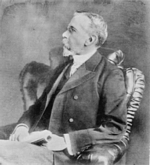 Blas Escontría de la Candelaria Blas Escontría de la Candelaria |
1879 | 1881 |
| MM | 1884 | ||
| LC | Luis Cuevas | 1885 | 1886 |
| MR |
Mariano Reyes Mariano Reyes was appointed assayer of San Luis Potosí in May 1889El Siglo Diez y Nueve, Año XLV, Tomo 89, Núm. 14,450, 21 May 1886 |
1886 | 1893 |
The assayers on its decimal coinage were:
| Initial | Name | Began on | Left office on |
| P or S | Pomposo Sanabria (engraver only) | 1867 | 1870 |
| G | Carlos Aguirre Gómez | 1867 | 1870 |
| H | Manuel Herrera Razo | 1870 | 1885 |
| E | Blas Escontría | 1879 | 1881 |
| C | Luis Cuevas | 1885 | 1886 |
| B | 1887 | ||
| R | Mariano Reyes | 1886 | 1893 |
| O | Juan R. Ochoa | 1870 | 1873 |