Mexican coins used in other countries
Gibraltar
This series was originally given to Martinique in the literature--where it still appears in KM--but are now believed to be from Gibraltar instead.
There was a series of countermarks.
Countermark Type I (central heart-shaped hole) (1761-1764)
KM-1 ½ Bit
KM-2 1 Bit
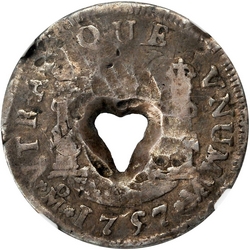
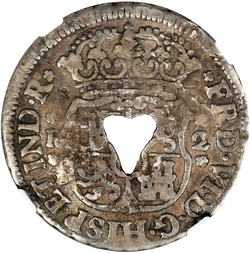
KM-3 2 Bits, ND (ca. 1761-64) (Stack’s Bowers NYINC auction, 8 January 2013, lot 1304)
pierced from a 2r 1757 M (KM- 86.1)
KM-4 5 Bits
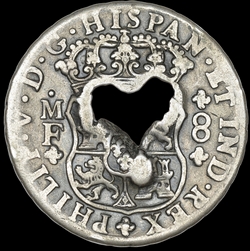
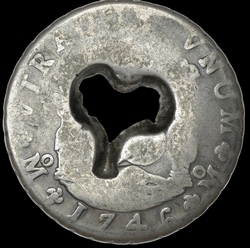
KM-5 10 Bits (Noonan’s Lyall Collection of Cut and Countermarked Coins, 27 September 2018, lot 5268)
Dollar (possibly valued at Seven Shillings and Sixpence) on an 8r 1746 Mo MF of Philip V (KM- )
Countermark Type II (crude heart-shaped hole with bevelled edge) (1764)
KM-6 ½ Bit
KM-7 1 Bit
KM-8 2 Bits
Km-9 5 Bits
KM-10 10 Bits
on 8r Mo (KM-104.2)
Countermark Type III (pointed heart-shaped hole with ornamental edges) (1765)
KM-11 ½ Bit
KM-12 1 Bit
KM-13 2 Bits
Km-14 5 Bits
KM-15 10 Bits
on 8r Mo (KM-104.1)
Countermark Type IV (blunt heart-shaped central cut with ornamented edges) (1700-1772)
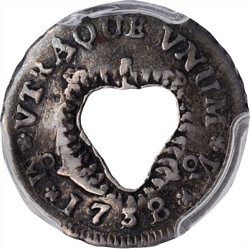
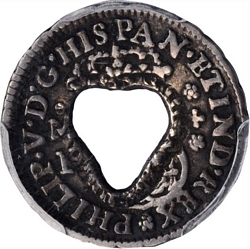
KM-16 ½ Bit, ND (1770-72) (Stack’s Bowers auction, 16 January 2021, lot 22327)
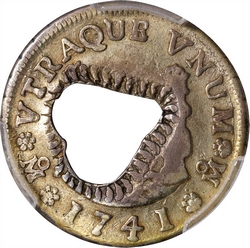
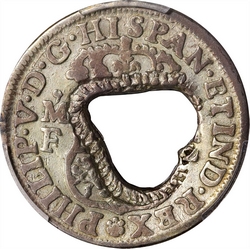
KM-17.1 1 bit ND (ca. 1770-72 (Stack’s Bowers auction, 14 November 2022, lot 71509)
Countermark Type IV applied to 1r 1741-Mo MF of Philip V (KM-75.1).
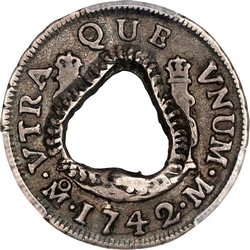
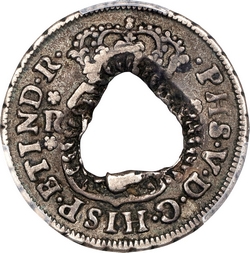
KM-17.1 1 bit ND (ca. 1770-72 (Stack’s Bowers NYINC auction, 13 January 2023, lot 21382)
Countermark Type IV applied to 1r 1742-Mo M of Philip V (KM-75.2).
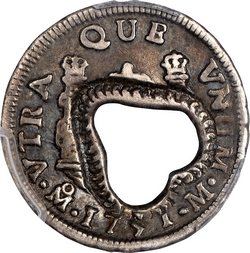
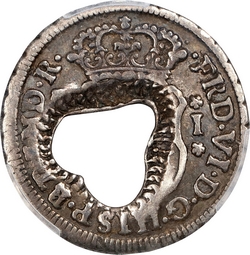
KM-17.2 1 Bit, ND (1770-72) (Stack’s Bowers NYINC auction, 13 January, lot 21383)
Applied to 1r 1751 Mo M of Ferdinand VI (KM-76.1).
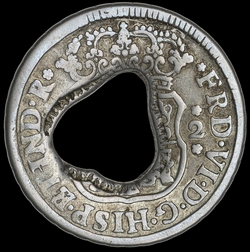
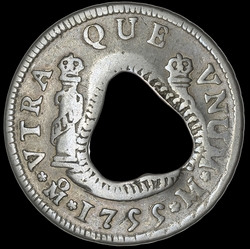
KM-18 2 Bits (Noonan’s Lyall Collection of Cut and Countermarked Coins, 27 September 2018, lot 5278)
Quarter-Dollar (presumably valued at Two Shillings and Tenpence-Halfpenny), on a 2r 1755 Mo of Ferdinand VI (KM- )
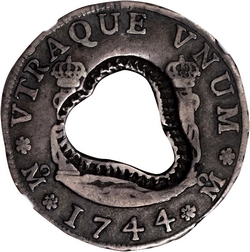
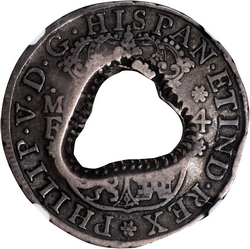
KM-19 5 bits,½ Dollar, ND. (ca. 1765) (Stack’s Bowers NYINC auction, 15 January 2022 , lot 2078)
On a 4r 1744 Mo MF Philip V (KM-94).
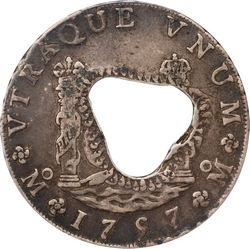
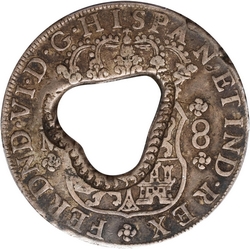
KM-20 10 Bits, ND (1770-72) (Stack’s Bowers auction, 28 August 2025, lot 42340)
Applied to an 8r 1757 Mo MM of Ferdinand VI (KM-104.2).
Madeira
Sierra Leone
Sierra Leone was a British colony in West Africa.
In 1825 the new governor Sir Neil Campbell declared British currency as legal tender, along with the Spanish dollars which were already current. As the Treasury fixed a high rate of exchange between sterling and [Spanish] dollars European merchants amassed British silver to send home at a profit. Small change grew scarce, so people cut their dollars into halves or quarters, which were generally accepted. Over time, people began cutting dollars into fifths or sixths and passing them off as quarters, severely eroding trust in the local money supply.
Therefore, on 30 March 1832, the British colonial government issued a currency proclamation[text needed] declaring that only officially counterstamped quarter dollars were legal tender for fractional silver coinage. This measure was aimed at stopping the widespread circulation of underweight, informally cut silver coins.
The authorities imported punches from Britain and stamped authentic cut-quarter pieces with a crowned "WR" (for King William IV, William Rex) to guarantee their weight and silver content. The cut quarter-dollars were valued at 13 pence.
The government collected the underweight, unstamped fragments and shipped them back to England to be sold as bullion, covering the financial loss through the Colonial Fund.
The countermarked coinage remained in use only briefly between 1832 and 1834 before further monetary reforms phased out cut coins.
Clipping (shaving metal from the coin’s circumference) was a common practice that debased the currency and undermined confidence. In 1835 the Lieutenant-Governor wrote that the over stamping had failed to stem clipping and Treasury urged that the cut dollars be replaced by British coins
In 1838 the Treasury agreed to call them in altogether[text needed], and advanced the Agents-General 9,000 to buy small British silver coins, sent out in exchange. 83,076 cut quarters were shipped to England to be sold as bullion.
On 7 January 1839 all cut monies ceased to be the current coinage of the colony[text needed].
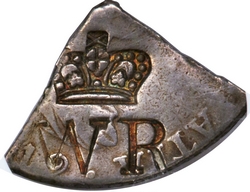
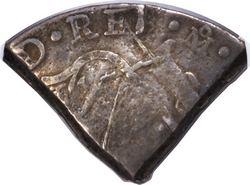
KM-10 Countermarked ¼ Dollar (13 Pence) ND (1832-1834) (Heritage sale 3107, May 2023, lot 31826)
Counterstamp: "Crown WR" on quarter cut piece of 8r 1819 Mo of Ferdinand VII (KM-111).
KM-13 Countermarked ½ Dollar
Counterfeit
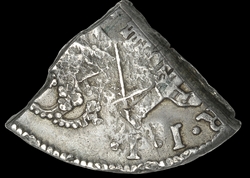
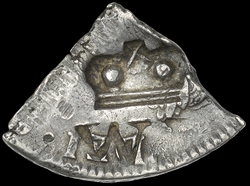
Quarter Dollar (Noonan’s Lyall Collection of Cut and Countermarked Coins, 27 September 2018, lot 5295)
A contemporary counterfeit. a cut quarter-segment of an 8r Mo JJ of Ferdinand VII, countermarked with crowned WR incuse.
Uncertain location
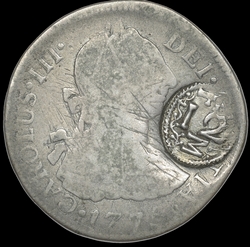
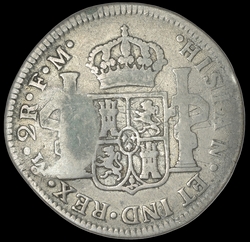
Prid-20 Quarter Dollar (Noonan’s Lyall Collection of Cut and Countermarked Coins, 27 September 2018, lot 5299)
2r 177- Mo FM of Charles III (KM- ) countermarked F12M with floral decoration and rope border raised within an oval indent.
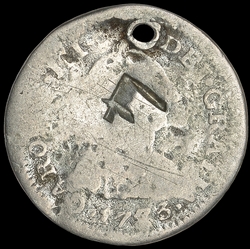
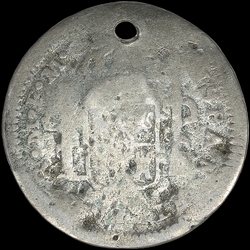
Prid-unlisted (Noonan’s Lyall Collection of Cut and Countermarked Coins, 27 September 2018, lot 5305)
Half-Real 1773 MO FM Of Charles III (KM-) countermarked with incuse 4.